
The Hidden Risk in AI Headshots That Most Businesses Miss
AI headshots are fast and cheap. For a lot of uses, that’s fine. A personal LinkedIn refresh, a side project, a casual profile photo, AI tools can absolutely get the job done and nobody is going to lose sleep over it.

The problem starts when a business uses them for the wrong thing.
Here’s the simplest way to put it. When you pay a professional photographer, you walk away with images your company owns and controls. When you use an AI platform, you walk away with a license. Those are two different things, and most businesses don’t realize they’ve chosen the second one until something goes wrong.
What can go wrong?
- A competitor generates an almost identical image of their own “executive” using the same platform.
- The AI vendor changes their terms of service and your usage rights shift.
- A regulator or licensing board questions whether the image accurately represents the professional it claims to depict.
- A client or patient feels misled when they meet the real person and the AI version was noticeably enhanced or altered.
There’s a word for this in the dating world. When someone uses old photos, heavily filtered photos, or photos that don’t look like the person who actually shows up, it’s called catfishing. A client who hires an attorney, meets with a financial advisor, or sits down with a doctor and realizes the person across the table doesn’t match the polished AI image from the website has just been catfished by a brand.
For some businesses, none of this matters. For others, especially in regulated industries, it matters a lot. The rest of this post explains why.
The AI Headshots Copyright Problem Nobody Mentions at Checkout
Here’s the issue in plain terms. Under U.S. law, copyright protection requires human authorship. If a machine generates the image with no identifiable human creative contribution beyond typing a prompt, there is no copyright. And if there is no copyright, there is no exclusive ownership.
This isn’t a fringe legal theory. It’s the consistent, documented position of the U.S. Copyright Office:
- March 2023: The Copyright Office published formal guidance stating that works “solely generated by a machine” are not eligible for copyright registration (88 Fed. Reg. 16190).
- January 2025: The Copyright Office reinforced that position in their report Copyright and Artificial Intelligence, Part 2: Copyrightability.
- March 2025: The U.S. Court of Appeals for the D.C. Circuit confirmed it in Thaler v. Perlmutter (No. 23-5233), holding that a machine cannot be an “author” under the Copyright Act.
Human authorship is not a technicality. It is a foundational requirement.
When a business clicks “download” on an AI headshot platform, what they’re actually receiving is a license governed by that platform’s terms of service. Not ownership. Not an exclusive asset. A license that the platform can modify, restrict, or revoke.
Most clients have no idea this is the arrangement they’ve agreed to.
Regulated Industries Carry Real Exposure

This is where AI headshots stop being a budget decision and start being a compliance decision.
Law firms operate under state bar advertising rules and ABA Model Rule 7.1, which prohibits false or misleading communications about a lawyer or their services. An AI-generated or AI-enhanced portrait that makes an attorney look meaningfully different from how they actually appear in court, in a deposition, or at a client meeting can fall on the wrong side of that rule. Some firms have already adopted internal policies banning AI-generated imagery from attorney bios entirely. Bianchi and Brandt here in Phoenix is one local example of a firm that made that call deliberately.
Medical and healthcare practices face similar exposure. Patient-facing materials are governed by truthful representation standards, and AI-generated images of clinicians, especially ones that smooth, slim, or otherwise alter appearance, can create informed consent and patient trust issues that aren’t worth the savings on a headshot session.
Financial services and wealth management firms operate under FINRA and SEC communications rules that require fair and balanced representation. An AI portrait that misrepresents an advisor’s appearance, age, or professional setting can complicate compliance review, especially for firms that need every piece of client-facing collateral signed off.
Regulated Industries
When Accuracy Is a Legal Requirement,
AI Has No Place in the Loop
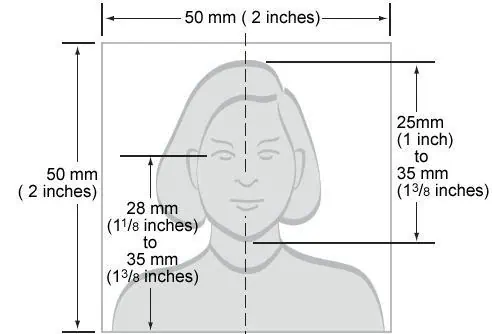
We’re one of the only photography studios in Phoenix that produces certified passport and citizenship photos. Those documents have strict legal requirements: no digital alterations, accurate likeness, specific dimensions and lighting. The discipline that goes into getting those right is the same discipline we bring to corporate headshots for regulated industries. When the image has to accurately represent a real human being for legal or compliance purposes, you don’t want AI in the loop.
Learn more about our passport and citizenship photo service →
The Leadership Page Sameness Problem
There’s another version of the exclusivity risk that matters in practice, even outside regulated industries.
AI headshot platforms don’t just generate images, they generate a look. Same lighting style, same color grading, same backgrounds, same subtle facial smoothing, same “executive portrait” template applied across millions of users. Upload your team’s photos to one of the major platforms and what comes back is technically yours to use, but visually it belongs to a category. You’re not getting a portrait of your leadership. You’re getting your leadership rendered in the house style of an AI model.
That’s not a problem if you’re a solo operator or a small local business where nobody is comparing your About page against three competitors at once.
It becomes a problem when your leadership page is doing real work:
- A prospective client is evaluating your firm against two or three others.
- Investors are clicking through team pages during diligence.
- The visual identity of your executives is part of how the market distinguishes your company.
This isn’t about a competitor stealing your CEO’s face. It’s about your CEO, your COO, and your head of sales ending up with the same flattened, AI-generic aesthetic as everyone else who took the budget shortcut.
Professional photography produces images that look like your people in your space. That distinction reads on a leadership page whether the visitor consciously notices it or not.

When Big Brands Get This Wrong, the Damage Is Public
If you want to see how this plays out at scale, look at how some of the biggest brands in the world have stumbled with AI-generated imagery over the past two years.
LEGO Ninjago, March 2024
LEGO apologized after fans caught the company using AI-generated artwork in a Ninjago website quiz. The images had the typical AI giveaways: misshapen hands, over-filtered lighting, anatomical errors a real illustrator would never produce. Ninjago co-creator Tommy Andreasen, who works at LEGO, publicly called the imagery “lousy in all aspects” and said “art should be made by artists.” The company removed the quiz, issued a formal apology, and stated it has “a clear policy not to use generative AI to create LEGO content.”
LEGO World Cup Ad, April 2026
Two years later, LEGO ran into a different version of the same problem. The company launched a viral World Cup ad featuring Lionel Messi, Cristiano Ronaldo, Kylian Mbappé, and Vinícius Jr. The ad went viral in part because fans immediately suspected it was AI-generated. Messi himself had to post the video with the hashtag #HonestlyItsNotAI to defend it. When a behind-the-scenes clip later suggested the production used body doubles with face-swap techniques, the conversation shifted from “amazing collaboration” to “what did we actually just watch.”
Levi’s, 2023
Levi’s announced plans to use AI-generated models in marketing imagery to increase the diversity of body types shown. The intent was reasonable. The reaction was not. Critics pointed out that the company was generating fake diverse models instead of hiring real ones, and the announcement became a case study in how AI imagery decisions can damage a brand’s credibility on the exact values the campaign was trying to demonstrate.
If global brands with eight and nine figure marketing budgets cannot deploy AI imagery without taking a public hit, a regional law firm, medical practice, or financial services company running AI headshots on its leadership page is operating in the same minefield with a fraction of the recovery resources.
The pattern across all of these incidents is consistent. Audiences are getting faster at spotting AI imagery, not slower. The cost savings on the front end are real. The reputational exposure on the back end is also real, and it tends to compound.
Vendor Liability Is Not Yet Settled
Active litigation such as Andersen v. Stability AI challenges the methods by which AI image platforms trained their models, including whether that training involved unauthorized use of existing photography. Businesses using headshots from platforms caught up in that litigation may face reputational and contractual complications even as non-parties. The legal landscape around AI-generated imagery is still being defined in real time, and businesses relying on it for mission-critical brand assets are operating with incomplete information about the downstream risk.
What Professional Photography Actually Gives You
This is not a conversation about quality. AI headshots can look polished. That’s not the point.
The point is ownership and control.
When a professional photographer directs your team through a session, the creative decisions, lighting setup, lens choices, posing direction, composition, post-processing, constitute documented human authorship. That authorship is:
- Registrable with the U.S. Copyright Office
- Enforceable in court
- Transferable to your organization through a clearly written licensing agreement
What you receive at the end of a professional session is a legally defensible asset your organization actually controls.
At Photo Fusion Studio, we’ve spent 13 years building that kind of work for corporate clients across Phoenix and beyond. Our images are created, owned, and licensed with full transparency, from the session through the final deliverable. We hold a federally registered trademark for our studio name because we understand what documented IP ownership looks like and why it matters. We bring that same thinking to every client engagement.
Who Should Be Paying Attention to This
If your organization falls into any of these categories, this conversation is worth having before you commit to an AI headshot solution:
- Law firms and legal departments
- Medical and healthcare organizations
- Financial services and wealth management firms
- Corporate teams where executive bios and leadership pages are central to client development
- Any company where professional credibility is a core business asset
Let’s Talk About Your Team
If you’re evaluating options for your next headshot project, whether that’s five people or fifty, we’re happy to walk through what a professional session looks like, what you’d own at the end of it, and what corporate and team pricing looks like for your situation.
Your team deserves to be represented by photos that actually look like them. Your clients deserve to meet the people they saw on your website. Let’s talk about what a real session looks like.